

In professional rehearsal, filming, and live production environments, sound isolation exists for one primary reason: to protect recording and capture workflows from unwanted external noise.
Why Sound Isolation Matters in Professional Studios?
While sound escaping a building can become a concern if it leads to complaints or enforced interruptions, the more critical issue for most professional users is whether external sound can intrude into the studio and compromise recordings, performances, or live delivery.
This article explains how sound isolation is understood in practice, what people usually mean when they talk about “soundproofing”, and how professional studios assess whether a space is suitable for real-world production work.
What People Usually Mean by “Soundproof”?
When people ask whether a studio is “soundproof”, they are rarely expecting absolute silence.
In practice, they are usually asking:
- Will external noise interfere with recording or filming?
- Can dialogue, vocals, or performances be captured reliably?
- Has noise intrusion ever disrupted sessions in real use?
- Will the day run smoothly without retakes due to sound issues?
In this context, “soundproof” is often shorthand for confidence that recordings will not be compromised by external noise.
How Sound Isolation Works in Practice?
In real-world studio environments, sound isolation is achieved through attenuation. That is, reducing the energy of sound across frequencies rather than attempting absolute elimination.
With sufficient isolation, external noise can be reduced to levels that are effectively inaudible in practice. While some sound energy may theoretically still exist, absolute elimination is not a meaningful or deployable standard for professional studios.
Active noise cancellation techniques do exist in highly controlled or specialised contexts. However, they are not applicable as a general solution for studio-scale sound isolation in dynamic rehearsal, filming, or live production environments.
For professional users, the relevant question is not whether sound can be eliminated, but whether external noise ever becomes a practical problem for recording.
Why Sound Isolation Is Most Critical for Recording?
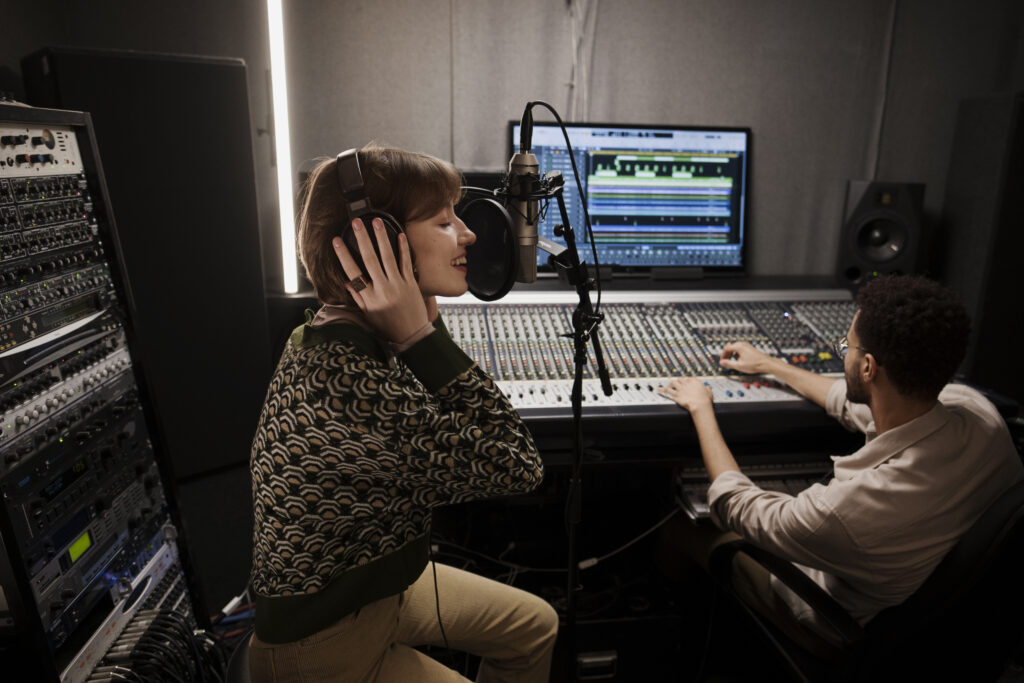
In practice, sound isolation is usually more critical for those recording sound inside the studio than for those producing sound within it.
For recording workflows:
- A single intrusive noise can ruin a take
- Interruptions break performance flow
- Retakes increase time and cost
- Livestreams offer no second opportunity
By contrast, sound being faintly audible outside a building is not inherently an issue unless it results in complaints or enforcement. The risk to recording integrity is therefore more immediate and more fragile.
How Professional Studios Evaluate Sound Isolation?
Rather than relying on absolute claims, professional studios evaluate sound isolation based on operational outcome.
Typical considerations include:
- Does external noise intrude on recordings in practice?
- Can sessions proceed without interruption?
- Has the space proven reliable across different types of work?
- Are any limitations clearly understood and planned for?
This approach focuses on real-world performance rather than theoretical specification.
Sound Isolation in Real-World Use
At Soundstage Studios, sound isolation is assessed by its impact on actual recording and capture workflows.
Over more than 25 years of continuous operation, the studio has supported:
- dialogue recording
- full-volume rehearsals
- pre-tour production runs
- filmed performances
- livestream events
During that time, external noise has not been a practical factor affecting recordings or live delivery. That operational history provides a clearer indication of suitability than any abstract claim.
Technical Perfection and Practical Reliability
There is an important distinction between theoretical perfection and practical reliability.
Theoretical perfection refers to silence under all imaginable conditions. Practical reliability refers to uninterrupted work in real production environments.
Professional studios are designed for the latter.
In practice, this means:
- recordings are not compromised by outside noise
- sessions proceed as planned
- performers and crews can focus on the work itself
That outcome is what professional users ultimately care about.
Neighbour Considerations
Noise escaping a studio becomes relevant when it leads to complaints, objections, or enforced interruptions. Well-designed, professionally operated studios manage this through location choice, construction, and operational experience.
However, this concern is secondary to recording integrity. A studio that cannot protect recordings from external noise is unsuitable, regardless of how quiet it appears from outside.
Better Questions to Ask When Evaluating a Studio
If you are assessing a studio for rehearsals, filming, or live capture, more useful questions include:
- Has external noise ever affected recordings in practice?
- What types of recording or capture sessions are run routinely?
- How long has the studio operated in this location?
- Are there known conditions clients should plan around?
These questions lead to concrete, experience-based answers.
A Studio That Supports Real-World Production
In practice, the physical behaviour of sound means that no studio can guarantee complete silence under every conceivable condition. However, professionally designed and operated studios can provide environments where sound isolation is not a practical concern for recording.
Soundstage Studios is designed to support uninterrupted professional work across rehearsal, filming, and live performance capture. Our approach to sound isolation reflects how production actually happens rather than how marketing language simplifies it.
If you are planning a rehearsal, production run, or filmed session in London and want to understand whether the space is right for your recording needs, we are always happy to discuss the practical details or arrange a visit.